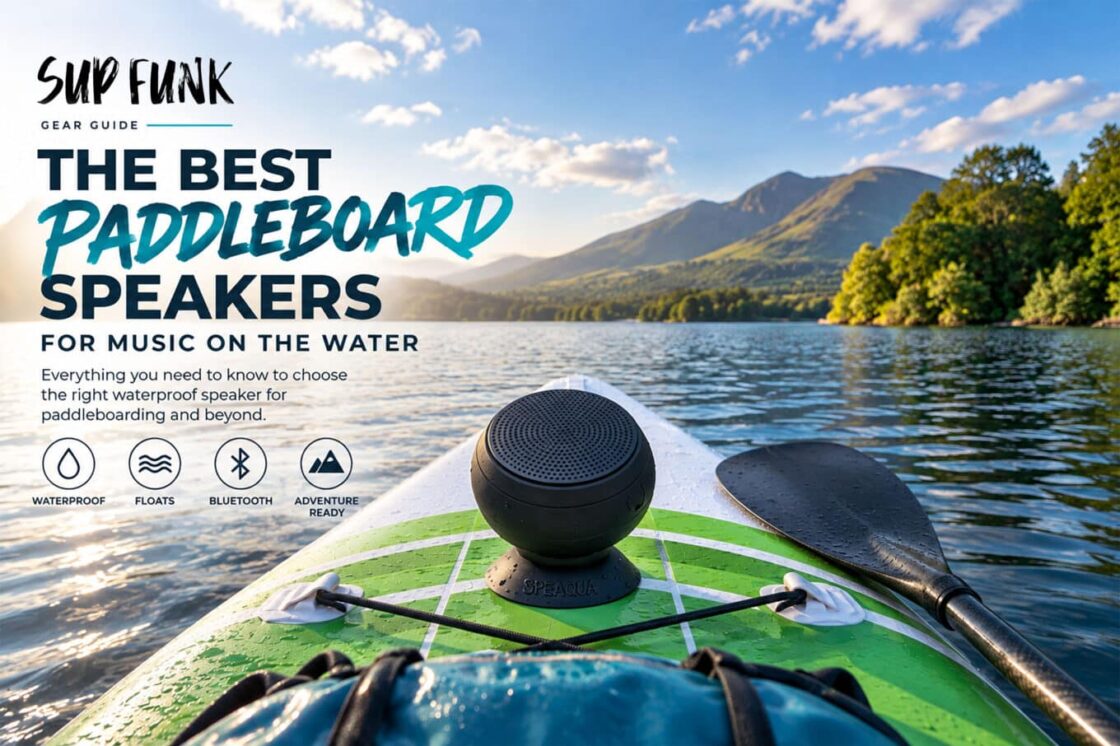
Best Waterproof Speakers for Paddle Boarding UK: What Actually Works on a SUP?
Taking music onto the water sounds simple enough. Buy a waterproof Bluetooth speaker, connect your phone, put it somewhere on the board and off you go.
In reality, choosing a good speaker for paddle boarding is a little more complicated. A speaker can sound fantastic at home and still be a poor choice on a SUP if it sinks when you drop it, has no sensible way to secure it or is simply too bulky to be useful once the rest of your kit is on the board.
Then there are the things traditional Bluetooth speaker reviews rarely seem to talk about. Can you actually hear it properly when you are standing several feet above and behind it? What happens when the wind picks up? Will it stay where you put it when the water gets a bit choppy, and if it does end up overboard can you actually get it back?
At SUP Funk, those questions matter to us just as much as outright sound quality because we spend a lot of time paddleboarding on UK waters. We naturally look at waterproof speakers through a paddler’s eyes first, but we also think a good adventure speaker should remain useful when you step off the board.
The same speaker might spend the morning on your SUP, the afternoon beside the tent and the evening providing a bit of background music while you cook at camp. That is why we are more interested in the complete package than simply deciding which speaker has the biggest bass or longest claimed battery life.
In this guide we’ll look at waterproofing, flotation, mounting, size, outdoor sound, battery life and how much a speaker depends on your phone. We’ll also share the waterproof speakers we genuinely recommend for paddleboarding, including the Speaqua models we use ourselves and a strong mainstream alternative from Ultimate Ears.
Because the best Bluetooth speaker is not necessarily the best paddle board speaker.
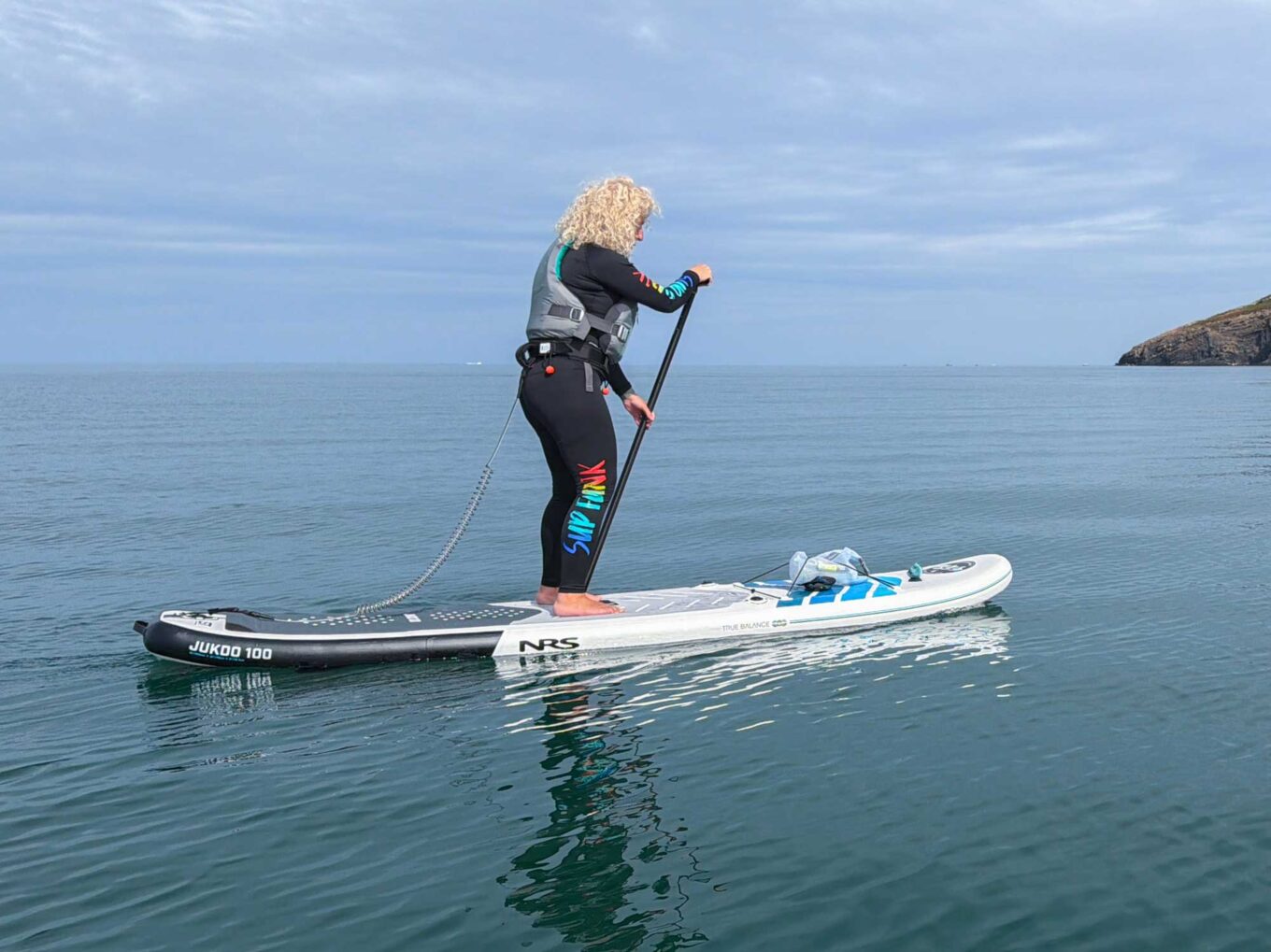
Can You Take a Bluetooth Speaker Paddle Boarding?
Absolutely, providing you choose the right one and use it sensibly. A compact waterproof Bluetooth speaker can be a great way to enjoy some music on the water without spending the whole paddle with headphones or earbuds in.
The important part is choosing a speaker that is genuinely suited to life around water rather than something that is simply described as an outdoor speaker. There is a big difference between coping with an occasional splash and surviving accidental immersion, just as there is a big difference between being waterproof and actually floating.
You also need to think about where the speaker is going to sit. Something that works brilliantly at a barbecue or on the beach can become surprisingly impractical on an inflatable paddle board if there is no sensible way to secure it or it takes up half of your cargo area.
For us, choosing a speaker for paddleboarding starts with how it will actually be used rather than simply looking at an audio specification sheet.
What Should You Look for in a Paddle Board Speaker?
A good paddle board speaker needs to get the practical things right before we start worrying about the finer points of sound quality. It needs genuine water protection, a sensible way of attaching it to the board and, ideally, enough buoyancy to float if things go wrong.
Size matters too. The speaker needs to produce useful sound outdoors without becoming another cumbersome piece of equipment strapped to the front of the board.
We also pay attention to how easy the controls are to operate with wet hands, how well the sound carries outside, whether the battery comfortably lasts for the sort of days we actually have and how dependent the speaker is on a phone. None of those things sounds particularly exciting in a product specification, but on the water they can make the difference between something you regularly take with you and something that eventually stays at home.
Proper Waterproof Protection
Waterproofing is the obvious place to start. If you are buying a Bluetooth speaker specifically for paddleboarding, we would want something designed to cope with considerably more than rain or an occasional splash.
Descriptions such as water resistant, weather resistant and splashproof can mean very different things, so we much prefer seeing a recognised IP rating. That gives you a clearer indication of how well the speaker has been designed to resist water and dust entering the product.
For regular use on a paddle board, we would generally look towards speakers designed to withstand accidental immersion rather than simple splash resistance. That does not mean deliberately throwing your speaker into the water every weekend, but anyone who paddles regularly knows that equipment sometimes gets rather wetter than planned.
Flotation Matters More Than You Might Think
This is one of the features we think gets overlooked.
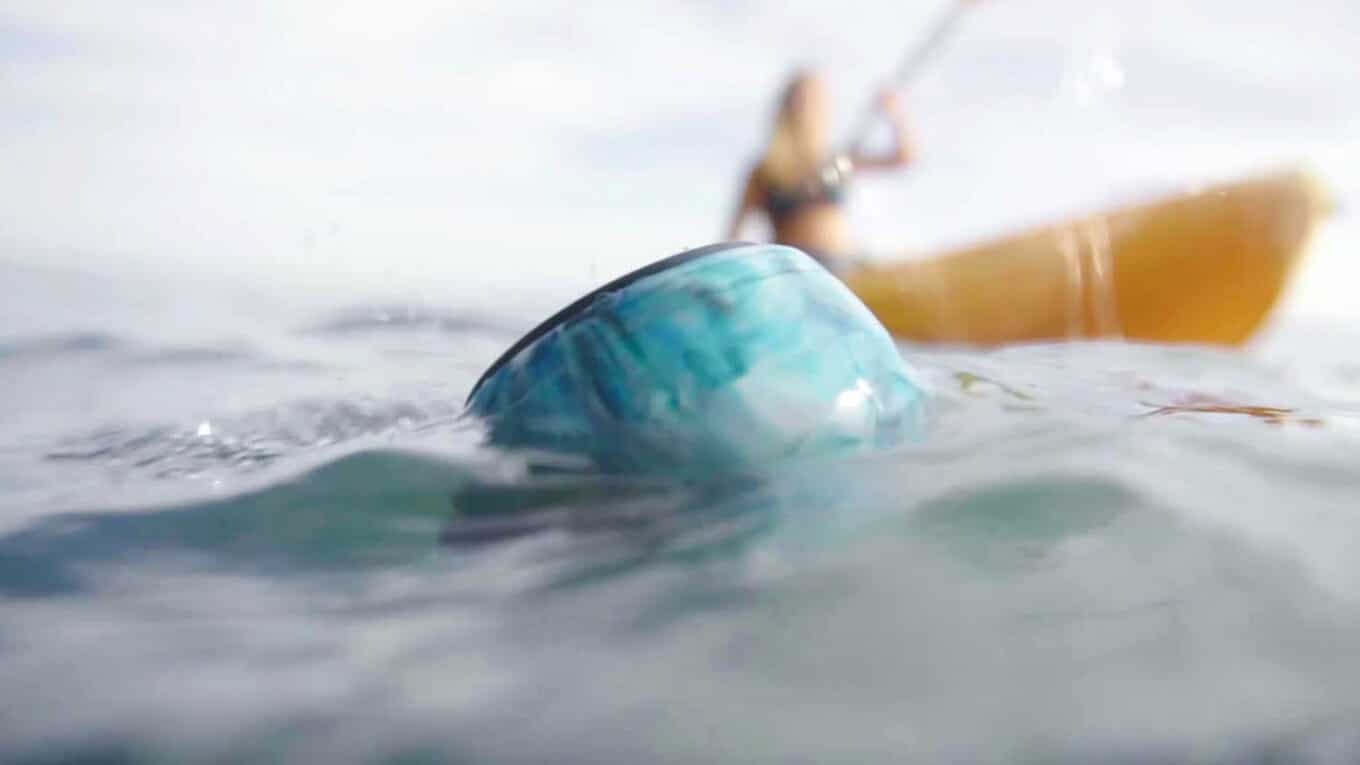
A waterproof speaker does not automatically float, and that distinction becomes pretty important when you are several metres from shore with deep water underneath you.
A speaker could be perfectly capable of surviving underwater and still disappear straight to the bottom of the lake. Knowing your £100 speaker technically survived the fall is not much consolation when you are watching it vanish into ten metres of water.
Therefore a floating Bluetooth speaker gives you another layer of protection because you have a realistic chance of getting it back. For paddleboarding, kayaking and other watersports, we see that as a genuinely useful feature rather than a marketing gimmick.
Not every good SUP speaker absolutely has to float. A properly mounted or tethered speaker can work extremely well, but all else being equal, flotation would certainly influence our choice.
A Sensible Way to Attach It
This is where plenty of otherwise excellent portable speakers start to become less practical.
Where exactly are you supposed to put them?
Most inflatable paddle boards give you cargo bungees and a selection of D-rings, but they were not necessarily designed around carrying a compact Bluetooth speaker. You can put one beneath the bungees, attach it with a carabiner, add a small tether or use a dedicated mounting system if the speaker supports one.
There is no single solution that works for every board and speaker. What matters is that the speaker stays secure, does not interfere with normal paddling and does not spend the entire trip moving around every time the board changes direction.
Speaker mounting sounds like a fairly boring specification when you are shopping online. Once you have taken speakers onto the water a few times, it suddenly becomes one of the features you notice most.
Size and Weight
Bigger speakers generally produce more sound, but they also bring more weight, more bulk and less available deck space. We already take enough equipment paddleboarding without adding something the size of a small suitcase purely for a bit of music.
For most recreational paddling, we prefer compact to medium-sized speakers. They are easier to secure, take up less room and are far more likely to come with us every time we head onto the water.
On the board, smaller is generally better providing the speaker still does what you need it to do. The calculation changes a little if we are heading away SUP camping or want the same speaker around the campsite afterwards, because in that situation we are happy to accept a little more size in exchange for better sound and longer battery life.
It is a balancing act. Even on a longer adventure, the speaker still needs to be small enough that it does not get in the way or take over the space we need for dry bags, water and other important kit.
Controls That Work With Wet Hands
Controls are another detail that seems insignificant until you try to use them with wet, cold fingers or while wearing gloves. Tiny controls and fiddly touch sensitive buttons can be annoying enough at home, let alone when you are standing on a paddle board.
We tend to favour large, obvious physical controls that can be operated without having to fumble around trying to work out what we are pressing. Outdoor equipment works best when simple jobs remain simple, and a paddle board speaker should be no different.
Sound That Actually Works Outdoors
A Bluetooth speaker can sound surprisingly loud in a kitchen or bedroom and considerably less impressive once you take it onto an open lake. There are no walls helping to contain the sound, the speaker may be several feet from your ears and even a moderate breeze can make a noticeable difference.
That is why we are less interested in sheer volume and more interested in how clearly the sound carries in real conditions. Vocals need to remain clear, music should still sound balanced from a normal paddling position and the speaker should not have to run at full volume simply to overcome a little wind.
Bass is great, but clarity on an actual paddle matters more. We are looking for music that adds something to the day, not trying to create a nightclub in the middle of the lake.
Enough Battery for the Adventures You Actually Have
Battery figures have become another battleground between speaker manufacturers, and it is easy to assume more must always be better. Twenty hours sounds more impressive than ten and thirty sounds better still, but it is worth asking how long you actually spend paddleboarding.
For many of us, a couple of hours is a normal paddle and four or five hours is already a substantial day out. Longer battery life becomes far more useful once you start SUP camping or spending an entire weekend away, but for normal paddling we would rather have a compact speaker with enough battery than carry unnecessary size purely for an impressive headline figure.
The right battery life is the amount that comfortably gets you through the adventures you actually have.
How Much Does It Depend on Your Phone?
This has become more important to us the more we have used speakers around water. Most Bluetooth speakers rely completely on a phone, tablet or another connected device to provide the music.
Normally that is not much of a problem, but water changes things slightly. Your phone is probably one of the most valuable and important items you have with you, so ideally it is sitting safely inside a waterproof pouch or dry bag rather than being repeatedly handled with wet hands.
There is another reason we like reducing the speaker’s dependence on the phones battery life. When we are out on the water, we would rather preserve as much phone battery as possible for navigation, communication and emergencies than use it unnecessarily streaming music for several hours.
This becomes particularly relevant if you are paddling solo or heading onto coastal water where having a working means of communication becomes even more important.
Some speakers allow music to be stored directly on the speaker itself, which means the phone no longer has to provide the audio stream. That was one of the features that originally caught our attention with Speaqua waterproof speakers and, once you consider how the speaker is actually being used on the water, it makes a lot of sense.
Waterproof and Floating Speakers Are Not the Same Thing
It is worth making the distinction absolutely clear because the two terms are often used as though they mean the same thing.
Waterproofing describes how well the speaker is protected against water entering the product. Flotation simply describes what happens to the whole speaker when it goes into the water.
For paddleboarding, both are useful but for different reasons. Waterproofing gives the electronics a chance of surviving an accident, while flotation gives you a chance of retrieving the speaker afterwards.
If a waterproof speaker does not float, that does not automatically make it unsuitable. It simply means we would think much more carefully about how it is tethered or secured before taking it onto deep water.
IP67 vs IP68 Speakers: Which Is Better for Paddle Boarding?
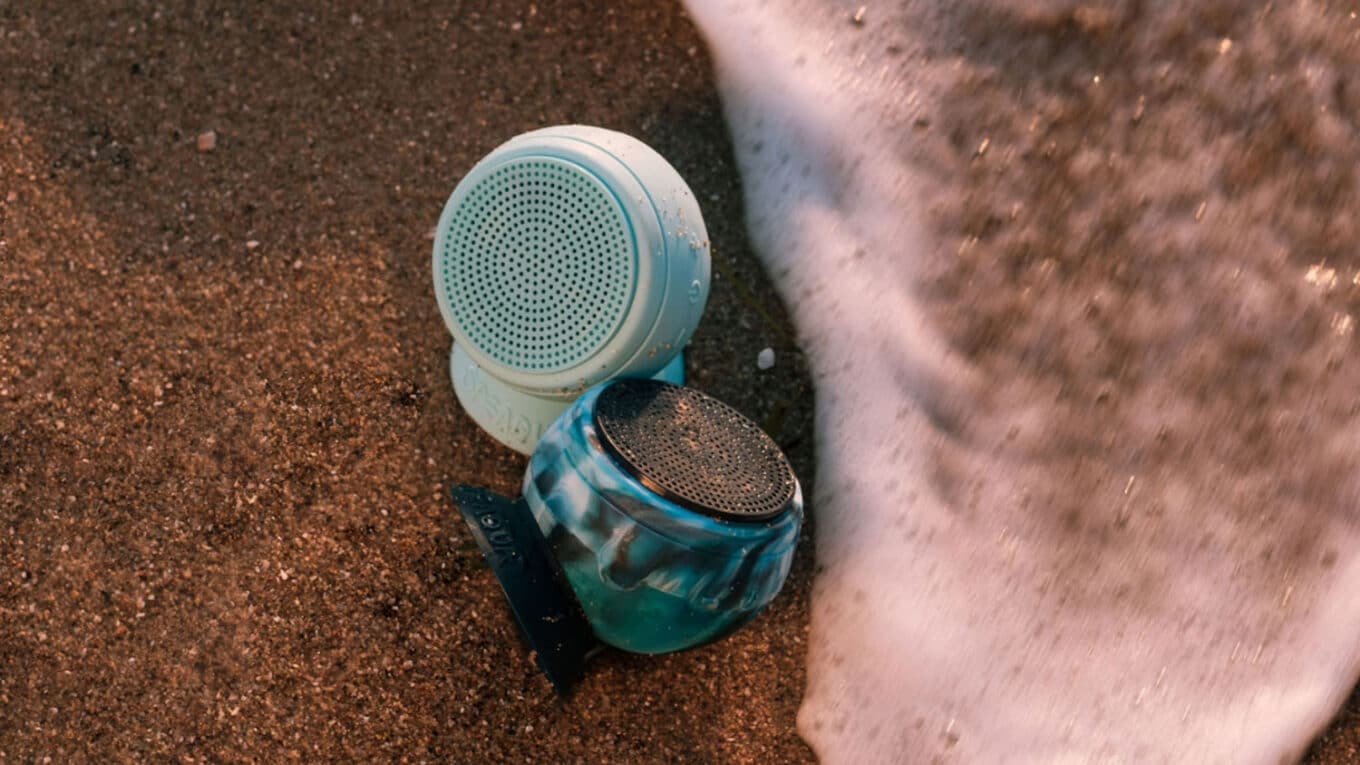
IP ratings can look unnecessarily complicated, but the basic principle is fairly straightforward. IP stands for Ingress Protection, with the first number relating to protection against solid particles such as dust and the second relating to water.
An IP67 speaker is designed to provide strong dust protection and withstand temporary water immersion under defined conditions. IP68 represents a higher water-ingress classification, although the exact depth and duration supported by any IP68 product should always be checked against the manufacturer’s own specification.
Does that automatically make an IP68 speaker better for paddleboarding? Not necessarily, because water protection is only one part of the decision.
An IP67 speaker that floats, is easy to secure and works brilliantly on a paddle board could make considerably more sense than an IP68 speaker that is bulky, awkward and sinks. The Ultimate Ears Wonderboom 4 is a good example because it combines an IP67 rating with a floating design, while the Speaqua Barnacle Pro 2.0 and Vibe 3.0 take a different approach with IP68 protection alongside flotation and additional mounting options.
We would always look at the whole product rather than simply buying whichever speaker has the highest IP number.
Will Bluetooth Work if the Speaker Goes Underwater?
Waterproofing does not change the basic limitations of Bluetooth. Bluetooth radio signals do not travel through water particularly well, so if a speaker becomes completely submerged the connection to your phone can become unreliable or disappear altogether.
Once the speaker is back at the surface, the connection can normally recover. This is another small advantage of a floating design because the speaker naturally remains around the surface instead of sitting completely underwater.
Local music storage provides another solution. If music is stored on the speaker itself, it does not need a continuous Bluetooth audio stream from the phone in order to play.
It sounds like a niche feature until you start looking at the speaker specifically as a piece of watersports equipment. Then it starts to feel surprisingly logical.
How Do You Attach a Bluetooth Speaker to a Paddle Board?
This may not be the most exciting part of a speaker guide, but for us it is one of the most useful things to think about. A SUP is a wet, moving platform and anything you take with you needs to stay where you put it.
There are several sensible ways to secure a speaker, and the best one depends on both the board and the speaker.
Using the Front Bungees
For a conventional compact Bluetooth speaker, the front cargo bungees are probably the obvious place to start. Put the speaker underneath them and the bungees provide some restraint without needing any specialist hardware.
The problem is that inflatable SUP bungee systems are normally designed to secure larger items such as dry bags. Smaller speakers can be surprisingly difficult to retain because they can slip between the cords unless you have some kind of mesh or additional tether.
The speaker also takes up cargo space you may already want for your dry bag or footwear. Depending on its shape, the bungees can obstruct the controls or partially block the speaker, particularly if you end up using another piece of kit to hold it in place.
Cylindrical speakers can also roll around more than you might expect as the board changes angle. For those reasons, using the cargo bungees alone is not our preferred way of securing a speaker on the water.
Using a Loop, Leash or Carabiner
Many outdoor speakers have some kind of attachment loop, and that is particularly useful on a paddle board. A loop or small carabiner can be connected to an appropriate D-ring, cargo bungee or another secure mounting point.
This provides a useful backup even if the speaker shifts from its normal position. If we were taking a speaker onto the water that did not float, we would be particularly keen to have some form of secure tether.
As with anything attached to the deck, make sure you are not creating an unnecessary snag or putting something where it interferes with your normal paddling.
Using a Dedicated Mount
A dedicated mounting system is often the neatest solution when the speaker has been designed for one. This was one of the features that made us take notice of Speaqua when we first discovered the brand.
The Barnacle Pro 2.0 and Vibe 3.0 provide several mounting options, including a removable suction cup, a 1/4-inch universal thread, GoPro-style mounting compatibility and a built-in carabiner. That gives you considerably more choice than simply wedging the speaker underneath the nearest bungee.
One thing worth remembering with an inflatable SUP is the surface itself. A suction cup needs a smooth, clean surface and will not work properly on a textured EVA deck pad, so exactly where you can position the speaker depends on the design of your board.
This is the sort of practical detail that is difficult to appreciate from a specification sheet but quickly becomes obvious when you actually start using speakers on paddle boards.
Where Should You Put a Speaker on Your Paddle Board?
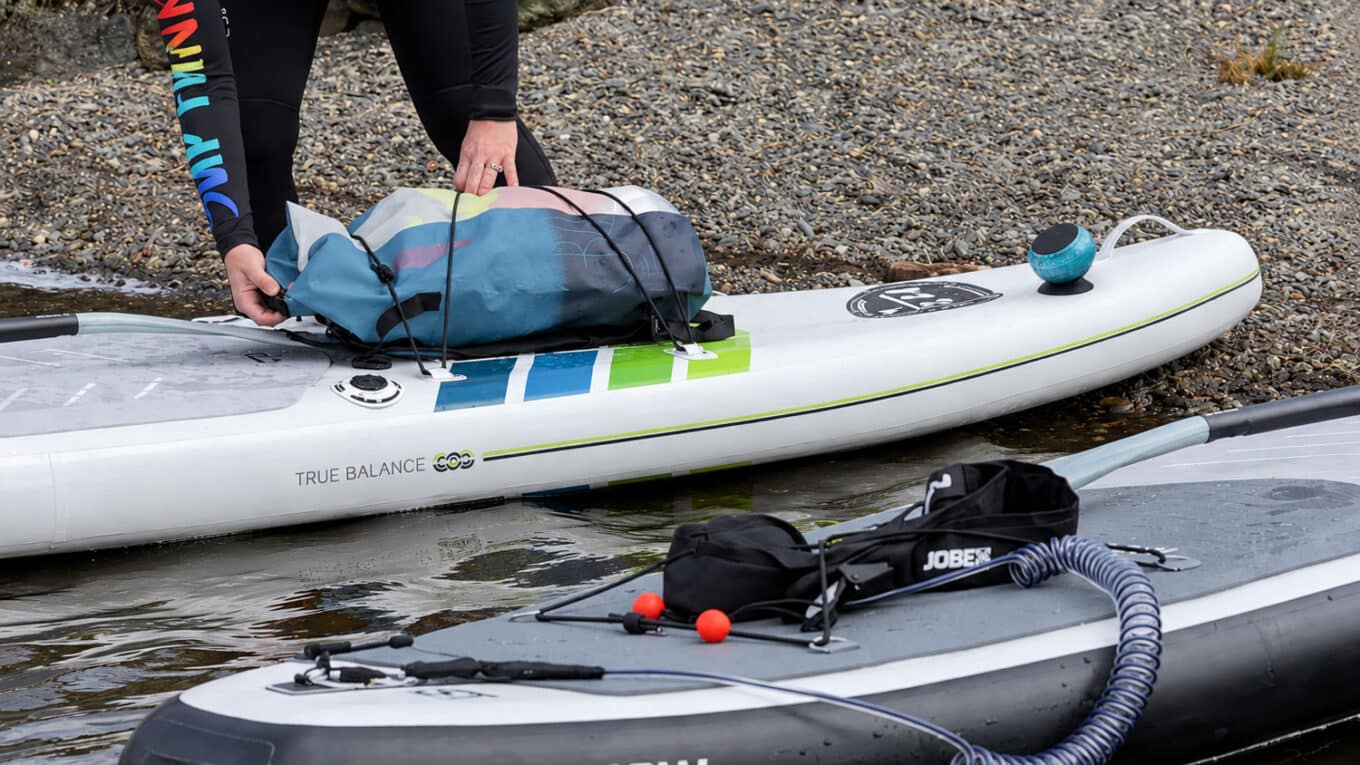
The front of the board is normally the obvious area because it keeps the speaker away from your main standing position and usually gives you access to bungees, D-rings or other attachment points. That does not automatically make the nose the best position for sound, though.
When you are standing, your ears may be several feet above and behind a small speaker positioned at the front of the board. Add a headwind and something that sounded surprisingly loud at home can feel considerably quieter.
Moving the speaker closer can improve the listening experience, but you do not want hard equipment cluttering your main standing area or interfering with your paddle stroke. We also avoid positioning a speaker somewhere we are likely to land on it if we fall, so keeping the central deck reasonably clear remains important.
For us, the best position is secure, reasonably easy to reach, clear of the main standing area and arranged so that the speaker is not pointing directly into a dry bag or other equipment.
There is no perfect position for every board and every speaker, so experimenting with your own setup is worthwhile.
How Loud Does a Paddle Board Speaker Need to Be?
Probably not as loud as you think.
For personal paddling, clear sound at a sensible volume is far more useful than enormous output. A larger speaker can make sense for a group paddle or back at camp, but maximum volume is not something we put particularly high on the list for everyday SUP use.
There is also the simple matter of being considerate. Anglers, swimmers, other paddlers and people sitting around the shoreline do not necessarily want to listen to your playlist, and the wildlife certainly did not ask for it.
Enjoy your music, but keep it yours and respect the people and environment around you.
Bluetooth Speaker or Headphones for Paddle Boarding?
We have used bone headphones and waterproof earbuds while paddling, and they definitely have their place. Sometimes they are exactly what you want, particularly if you are out alone and would rather keep your music completely personal.
For longer or more social paddles, however, we do not always enjoy having something in our ears. You end up taking them out to talk, hear what is happening around you or simply enjoy the sounds of being outside.
That is one of the reasons we like a compact external speaker. You can have some background music while still talking naturally to the people you are paddling with and retaining more awareness of what is happening around you.
That does not make music on the water automatically safe, and neither a speaker nor headphones should ever distract you from changing conditions, boats or other water users. There are also plenty of days when we would choose no music at all because part of what makes paddleboarding special is the peace.
Sometimes the sound of the paddle going into the water is all the soundtrack you need.
Can You Listen to Music Paddle Boarding Without Using Your Phone?
With most Bluetooth speakers, your phone or another connected device provides the music, which means it needs to come with you and remain within Bluetooth range. We would normally want an appropriate means of communication with us on the water anyway, so leaving the phone at home is not really the point.
The advantage is being able to put the phone somewhere properly protected and leave it there.
The Speaqua Barnacle Pro 2.0 and Vibe 3.0 both have 8GB of internal storage, allowing compatible music files to be loaded directly onto the speaker. Once the music is stored locally, your phone no longer has to provide the audio stream.
For us, this is one of Speaqua’s most useful features. The phone can stay safely inside a waterproof pouch or dry bag while the speaker gets on with playing the music.
It also means we are not unnecessarily using phone battery for hours of streaming when we would rather preserve that power for navigation, photographs, communication or an emergency.
It is such a simple idea that we are slightly surprised it is not more common on speakers designed specifically for outdoor adventures.
How Much Battery Life Do You Need for Paddle Boarding?
There is no magic number because it depends entirely on what you do. If your normal session is a relaxed two-hour paddle, you do not need an enormous speaker purely because it can play continuously for a day and a half.
If you are SUP camping, travelling in a campervan or using the same speaker from morning until evening, longer battery life becomes much more valuable, particularly if you do not have easy access to power.
Speaqua’s current range illustrates the difference quite nicely. The compact Cruiser H2.0 is rated for up to five hours, the Barnacle Pro 2.0 for up to eight hours and the larger Vibe 3.0 for up to twelve hours, while Ultimate Ears rates the Wonderboom 4 at up to fourteen hours.
Real-world battery life will always vary with volume and usage, so we would not obsess over a small difference in claimed figures. What matters is whether the speaker comfortably gets you through the type of day you are buying it for.
Small or Large Speaker: Which Works Better on a SUP?
For most recreational paddleboarding, we prefer something relatively compact. A smaller speaker takes up less room, is easier to secure and is far less likely to become another piece of equipment you decide not to bring.
That does not mean tiny is automatically better. If a speaker becomes impossible to hear as soon as the wind picks up, making it smaller has not really achieved anything.
Larger speakers make more sense when sound is a bigger priority, you are paddling with a group or the speaker is going to continue being used at the campsite, beach or campervan after you leave the water.
If we were packing for a weekend of paddleboarding and camping, we would happily accept a little extra size for better sound and battery life. It still needs to remain compact enough to fit comfortably on the board alongside the equipment that actually matters.
Think about the entire adventure rather than just the couple of hours you spend standing on the SUP.
One Overlooked Specification: A Built-In Microphone
One specification that is very easy to overlook when choosing a waterproof Bluetooth speaker is a microphone. It certainly isn’t as exciting as battery life, waterproof ratings or sound quality, but once you start using a speaker regularly on the water it can become surprisingly useful.
How many times have you been paddling along quite happily only for your phone to ring? Normally that means stopping, reaching into your waterproof pouch or dry bag, getting the phone out and then spending the next few minutes drifting wherever the wind or current decides to take you while you try to have a conversation.
Of course, most calls can simply wait until you are back on shore, and sometimes that is exactly what we do. But every now and again the call is important, or in our case we may have become separated on the water and want to speak to each other without shouting across half the lake.
This is another area where the Speaqua speakers have a useful advantage. Their built-in microphones allow the speaker to work as a speakerphone when connected to your phone, so once the call is connected you can talk without physically holding the handset. That means the phone can stay safely protected while you continue paddling and communicating.
It is not perfect in every situation. Strong wind can make any hands-free call more difficult, and microphone performance will also depend on where the speaker is positioned on the board. On breezier days we sometimes need to speak a little louder, but in normal conditions it is a genuinely useful feature.
It is one of those additions that looks fairly insignificant on a specification sheet, yet once you have actually used it on the water you start to appreciate why it is there. For us, anything that means less handling of an expensive phone with wet hands while still allowing us to communicate is a welcome addition.
We are also currently experimenting with waterproof Bluetooth control buttons that can be strapped to the paddle shaft or positioned somewhere easy to reach. The idea is that, with the right setup, you could answer a call without having to stop paddling, reach for your phone or even break your stroke. We are still trying a few different options to see what actually works reliably on the water, so once we have found a setup we are happy with we will come back and update this guide with our recommendations.
Waterproof Speakers We Recommend for Paddle Boarding
We could fill this section with ten or fifteen waterproof Bluetooth speakers simply because they exist, but we do not think that would be particularly useful.
What matters to us is whether a speaker genuinely works on a paddle board. The products below are the ones we think make sense for different types of paddler rather than an endless list built from specifications.
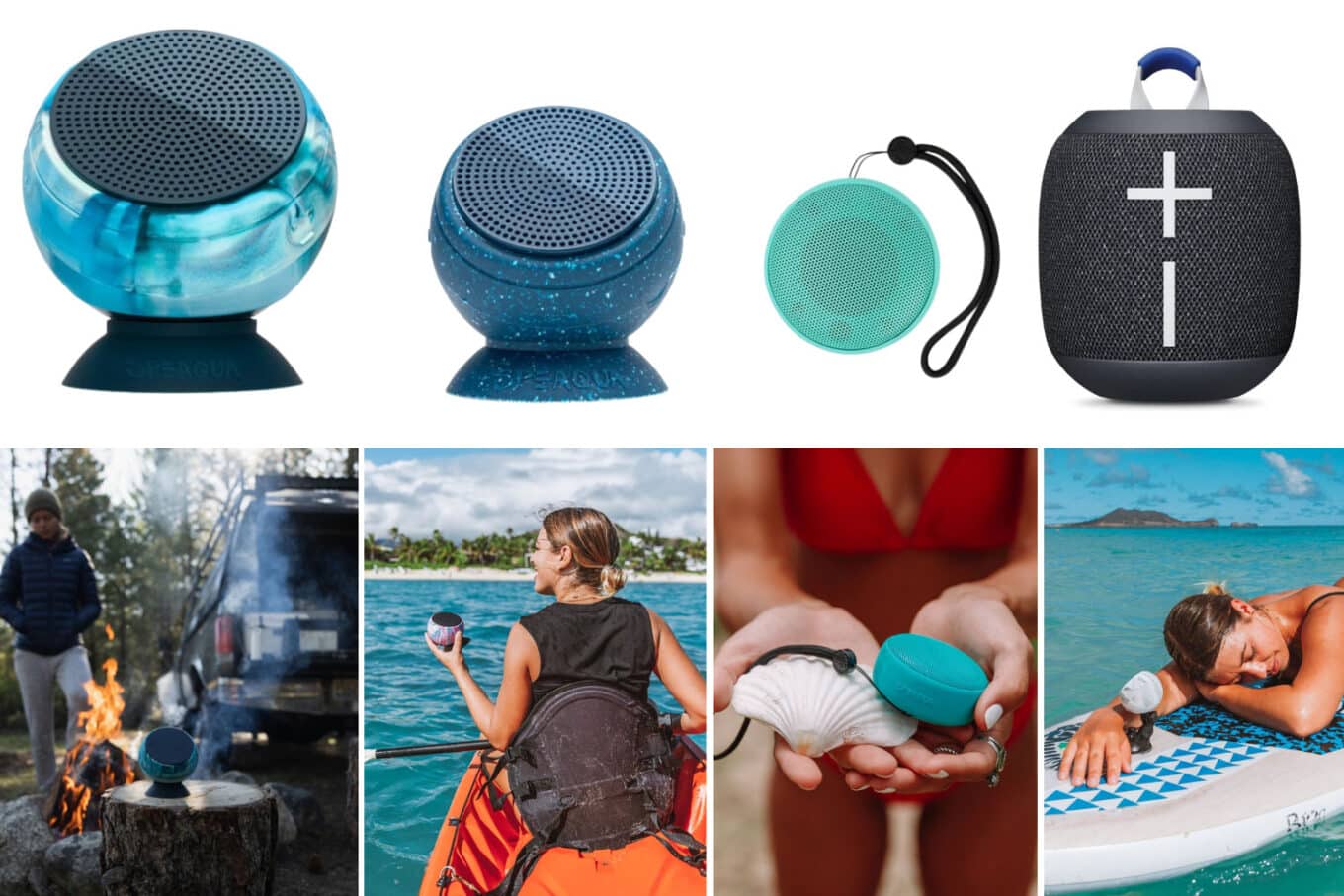
We use the Speaqua speakers ourselves and deliberately bought the Ultimate Ears Wonderboom 4 as a mainstream alternative so we could see how a well-known floating speaker compares with something designed more specifically around watersports.
There are things we like about all of them, but they suit slightly different uses.
Speaqua Barnacle Pro 2.0 – Our Pick for Paddle Boarding
If we were choosing one speaker specifically to take paddleboarding, the Speaqua Barnacle Pro 2.0 would be our first choice.
It is compact enough that it does not dominate the deck, carries an IP68 waterproof rating, floats and, importantly, gives you several sensible ways of securing it to the board. That last point matters more than it might sound because mounting is one of the biggest practical differences we have noticed between a speaker that is simply waterproof and one that works particularly well on a SUP.
The Barnacle Pro can use its suction mount on an appropriate smooth surface, attach through its 1/4-inch universal thread or GoPro-style mounting option, or be secured using its built-in carabiner. That gives us considerably more flexibility than trying to wedge a conventional speaker beneath cargo bungees and hoping it stays where we put it.
The other feature we particularly like is the 8GB of internal music storage, which can hold around 2,000 compatible MP3 tracks. We can load music directly onto the speaker, put the phone safely inside a waterproof pouch or dry bag and leave it there rather than relying on the phone to stream music throughout the paddle.
With a claimed battery life of up to eight hours, it comfortably covers the sort of paddling we normally do. There are mainstream speakers with considerably longer battery figures, but for us the combination of compact size, flotation, mounting and phone-free playback is far more relevant on a SUP.
The sound is great for such a small speaker and also has a built in ‘EQ’ boost button to change the output sound between both indoor and outdoor use.
It is also useful once you come off the water, so it does not feel like a specialist gadget that earns its place for only a couple of hours.
It is also one of those gadgets that ends up being useful in far more places than you first expect. We have used it around the house and outdoors, it is waterproof enough to come into the shower, and the built-in 1/4-inch thread and GoPro-style mounting compatibility mean it can even be fitted to bike handlebars with the appropriate mount. That versatility is one of the things we like most about the Barnacle Pro 2.0. It is not simply a waterproof speaker for paddleboarding, but a genuinely useful outdoor adventure speaker that has clearly been designed with life around water in mind.
For regular paddleboarding, this is the Speaqua speaker we would choose and use most often.
View the Speaqua Barnacle Pro 2.0 at SUP Funk →
Ultimate Ears Wonderboom 4 – A Strong Mainstream Alternative
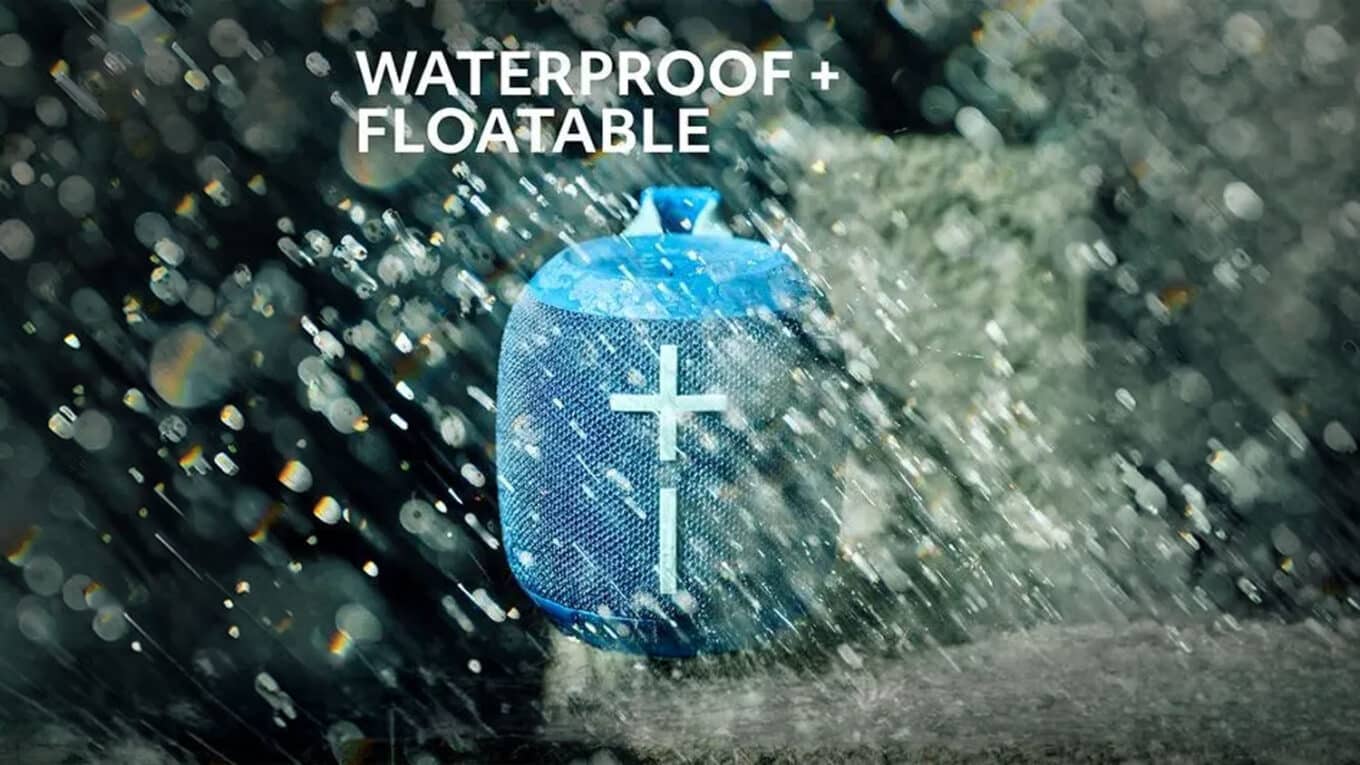
The Ultimate Ears Wonderboom 4 is the speaker we would recommend to somebody who wants a recognised, general-purpose Bluetooth speaker that will also cope extremely well around water.
It is compact, IP67 rated and designed to float, which immediately gives it genuine credentials for paddleboarding rather than simply being an outdoor speaker capable of surviving a splash. Ultimate Ears also gives it an Outdoor Boost mode designed for outside listening and rates the battery for up to fourteen hours.
Where it differs from the Barnacle Pro is in its overall approach. The Wonderboom feels more like an excellent conventional portable speaker that has been made tough enough for outdoor and water use, whereas the Barnacle feels as though more thought has gone into how the speaker will actually be attached and used during watersports.
The Wonderboom does not give us the same range of mounting options and depends on a connected device for music playback, so we need to think a little more carefully about where the speaker and phone are going to live on the board. None of that makes it a poor choice, quite the opposite but they are differences we notice far more on a paddle board than we would sitting around a campsite.
For somebody who wants one familiar speaker for the house, garden, beach, campsite and occasional paddle, the Wonderboom 4 makes plenty of sense. If paddleboarding is the main reason for buying the speaker, we prefer the more water-specific features of the Barnacle Pro.
We will explore those differences properly in our dedicated Barnacle Pro 2.0 vs Wonderboom 4 comparison rather than turning this guide into a head-to-head review.
Speaqua Vibe 3.0 – Better for Bigger Sound and Longer Adventures
The Speaqua Vibe 3.0 is the one we would choose when we want more sound without giving up the features that make the Barnacle Pro so useful around water.
It retains IP68 waterproof protection, a floating design, internal music storage and versatile mounting options, but moves into a larger body with a claimed battery life of up to twelve hours. That makes it particularly appealing for longer days where the speaker is going to be used on the board and then continue working back at the campsite, beach or campervan afterwards.
There is inevitably a trade-off. The Vibe takes up a little more room on the board than the Barnacle Pro, so for a straightforward couple of hours paddling we normally prefer keeping things smaller and simpler.
The vibe is a truly fantastic speaker with a better sound output and deeper base compared to the Barnacle Pro 2.0 but this makes it larger and although it can comfortable sit on a paddleboard some might prefer the smaller footprint of the Barnacle Pro 2.0.
Where the Vibe earns its extra size is when the speaker has more work to do. If we are away for a weekend, paddling during the day and using the same speaker around camp in the evening, the additional sound and battery capacity make much more sense.
That is really how we see the difference between the two. The Barnacle Pro is our choice when paddleboarding comes first, while the Vibe 3.0 makes more sense when you want one speaker to cover the whole adventure.
Speaqua Cruiser H2.0 – Small, Simple and Easy to Take Anywhere
The Speaqua Cruiser H2.0 sits at the opposite end of the range. It is small, straightforward and very easy to find space for when the deck is already carrying a dry bag, water bottle and everything else we seem to accumulate on a paddle.
It carries an IP68 rating and is designed to cope with water, dust, sand and the general knocks that come with outdoor use. Unlike the Barnacle Pro and Vibe, however, it does not float and does not include internal music storage, so when we use it around water we want it properly tethered.
What it gives you in return is excellent portability. It is the sort of speaker that can disappear into a kit bag without making you question whether it is worth bringing. This is a great alternative to having a speaker fitted on the deck of your paddleboard and can simply be clipped via a carabiner to a clothing loop or your life jacket giving you a personal close up soundtrack.
It is worth pointing out that due to its small size the speakers base, volume and quality is not the same as the larger speakers but that is not what it is designed for. If you want a very small versatile speaker that you can slip in your pocket and take anywhere it is fantastic.
We like the cruiser as a great alternative and comes into its own when size and weight are important such as hiking or on the golf course.
We would not choose the Cruiser over the Barnacle Pro for regular SUP use because flotation and the extra mounting options are simply too useful. If you want something very compact, waterproof and affordable for occasional paddling, travelling, beach days and general outdoor use, however, the Cruiser makes plenty of sense.
It also has a built-in bottle opener. We cannot claim that improves its performance on a paddle board in any measurable way, but we are still rather glad Speaqua put it there.
View the Speaqua Cruiser H2.0 →
Which Speaqua Speaker Would We Choose for Paddle Boarding?
If paddleboarding comes first and everything else second, we would choose the Barnacle Pro 2.0. Its combination of compact size, flotation, flexible mounting and internal music storage fits what we actually want when standing on a board.
For longer adventures where the speaker will spend as much time around camp as it does on the SUP, we would step up to the Vibe 3.0 for the extra sound and battery capacity.
The Cruiser H2.0 is the simple compact option when keeping size and cost down matters more and you are happy to keep the speaker securely tethered.
That does not mean one is universally better than the others. It is about choosing the speaker that fits the way you actually paddle and the adventures you have away from the water.
The larger Speaqua Barnacle X will eventually sit above the existing range for people wanting considerably more sound, and will be available late 2026. We would rather recommend the speakers you can actually use and get your hands on and will update this article as and when more speakers become available.
You can also see the full Speaqua waterproof speaker range if you want to compare the different sizes and options side by side.
What About Larger Waterproof Speakers?
There is another end of the waterproof-speaker market that prioritises considerably more power, longer battery life and much bigger sound.
Products such as the Soundcore Boom 3i are a good example. A larger waterproof speaker can make a great deal of sense for groups, beach days, boats and campsites where portability is not the main consideration.
On an inflatable paddle board, however, our priorities are different. Once we have a dry bag, safety equipment, water and everything else we need for the day on the deck, we generally prefer a speaker that takes up less space and is easier to secure.
That does not make larger waterproof speakers worse products. They are simply solving a different problem.
If we wanted something primarily for the campsite with occasional use on the water, we would consider a larger speaker much more seriously. For regular SUP use, compactness remains high on our list.
What About Kayaking?
Most of the same principles apply to kayaking. Waterproofing, flotation, secure attachment and controls that remain easy to use around water are every bit as useful.
A kayak can sometimes provide more options for attaching a speaker because you may have additional deck rigging, storage areas or mounting points. Compact speakers with carabiners or action-camera-style mounts can therefore work particularly well.
Kayaking deserves exactly the same practical approach. Waterproofing, flotation, secure mounting and simple controls all matter just as much in a kayak as they do on a paddle board, although the way the speaker is carried or mounted can be quite different. As SUP Funk expands further into kayaks and kayaking equipment, we’ll be using and testing speakers in both environments and updating our recommendations based on what actually works on the water.
What About Salt Water?
Sea paddling introduces another challenge: salt.
A waterproof rating does not mean we would come off the sea, throw the speaker into a bag covered in salt water and forget about it. Salt deposits can be hard on outdoor equipment, so follow the manufacturer’s cleaning instructions and, where appropriate, clean the speaker with fresh water after saltwater exposure before allowing it to dry properly.
Charging ports and protective covers deserve particular attention because they need to be clean and dry before charging. If most of your paddling is coastal, it is also worth checking whether the manufacturer gives specific advice about saltwater use rather than assuming a general waterproof rating covers everything.
How SUP Funk Judges Waterproof Speakers
Traditional audio reviews quite rightly concentrate heavily on sound quality. We care about sound as well, but we are paddleboarders rather than a hi-fi laboratory, so the way we judge a speaker is slightly different.
When we take one onto the water, we want to know whether it is genuinely protected, whether it floats, how easy it would be to retrieve and where we are actually going to put it on the board. We want to know whether the controls remain easy to use with wet hands, whether the sound reaches us properly from a normal standing position and how much difference the wind makes.
Battery life needs context as well. We are less interested in rewarding whichever speaker produces the biggest number and more interested in whether it comfortably lasts for the type of day it has actually been designed for.
Then there is what happens when the paddle finishes. Can we take the same speaker back to camp, clip it to a bag or use it beside the tent without wishing we had brought something else?
For us, that is how adventure equipment should be judged. Not simply by asking whether it works, but whether we would genuinely want to take it with us again.
Some Bluetooth Speaker Features Matter Less on a Paddle Board
Maximum volume is a good example. If your goal is making sure everybody on the opposite side of the lake can hear your music, we are probably not the right people to ask.
The same goes for enormous bass. We enjoy good sound, but not if achieving it means carrying an unnecessarily large speaker on a board where every bit of deck space could be doing something more useful.
Apps and endless EQ adjustments also sit slightly further down our list. Some people love that level of control and there is absolutely nothing wrong with it, but on the water we tend to appreciate a straightforward physical button that does exactly what we expect.
None of those features is pointless. They are simply less important to us when the main question is whether a speaker works properly on a paddle board.
Some Features Matter More Than You Expect
Flotation is probably the most obvious example, followed closely by having a proper attachment point. Physical controls suddenly become more valuable once your hands are wet, while low weight becomes increasingly attractive every time you carry an inflated board down to the water.
Internal music storage is another feature we could easily have overlooked before using speakers specifically for watersports. Once your phone is safely packed inside a waterproof pouch or dry bag and you realise you do not actually need to touch it for the rest of the paddle, the advantage becomes much clearer.
Finally there is a built in microphone which really does have many benefits while out on the water allowing you to use a device as a speaker phone keeping control of your paddleboard and Kayak by being able to maintain a paddle stroke.
These are not necessarily the features that sell a Bluetooth speaker in an electronics shop. On a SUP, they are the things we tend to notice.
Using a Bluetooth Speaker Responsibly on the Water
We love music, but one of the reasons we paddle is to get outside and away from noise. There is no reason the two things cannot coexist.
If you are on an empty stretch of water with nobody around, some background music can add something to the day. If you are drifting past anglers, wildlife, houses or other paddlers who are clearly enjoying the peace, turn it down.
It really is just common sense.
Music should never become a distraction either. Conditions change, boats appear and you may need to communicate quickly with the people you are paddling with, so whatever you are listening to should always remain secondary to what is happening around you.
Sometimes the right volume is low, and sometimes the best choice is simply to switch it off.
Are Waterproof Speakers Useful Beyond Paddle Boarding?

Definitely, and this matters because very few people are going to buy a decent waterproof speaker solely for an occasional two-hour paddle.
Kayaking is the obvious crossover, but the same features can be useful at the beach, around a campsite, beside a swimming pool, on a boat or when travelling in a campervan. A small rugged speaker can also make a great travel companion, particularly if it has a sensible attachment point.
That is why we do not judge every speaker solely by how it performs on the front of a SUP. We look at speakers through a paddleboarder’s eyes first because that is what we know, but good adventure kit should earn its place more than once.
Waterproof Paddle Board Speaker FAQs
Can You Use a Bluetooth Speaker on a Paddle Board?
Yes. A suitable waterproof Bluetooth speaker can work extremely well on a paddle board, particularly if it is compact and can be secured properly.
We would favour a speaker with genuine water protection and, ideally, one that floats if it does end up overboard.
Do Waterproof Bluetooth Speakers Float?
Not necessarily. Waterproofing tells you how well the product resists water entering it, but it does not tell you whether the speaker itself is buoyant.
Always check whether the manufacturer specifically states that the speaker floats rather than assuming that waterproof automatically means floating.
What Is the Best Waterproof Rating for a Paddle Board Speaker?
We would look for a speaker designed to withstand accidental immersion rather than something that is simply splash resistant. IP67 and IP68 are both commonly found on suitable outdoor speakers.
The rating should not be considered in isolation, though. Flotation, mounting, size and general usability can be just as important on a paddle board.
Is IP67 Good Enough for Paddle Boarding?
Yes, it can be. An IP67 speaker that floats, is easy to secure and suits the way you paddle can make an excellent SUP speaker.
A higher IP rating does not automatically make another speaker more useful on the board.
Is IP68 Better Than IP67?
IP68 represents a higher water-ingress classification, but the exact level of protection should always be checked against the manufacturer’s specification.
For paddleboarding, we would judge the complete speaker rather than buying purely on the IP number such as does it float?
Can Bluetooth Speakers Play Underwater?
Bluetooth wireless signals do not travel particularly well through water, so a normal Bluetooth connection can become unreliable when a speaker is fully submerged. Once the speaker returns to the surface, the connection can normally recover.
Speakers with locally stored music do not rely on a Bluetooth audio stream for playback, although waterproofing and underwater audio remain two different considerations.
Where Should I Put a Bluetooth Speaker on My Paddle Board?
The front cargo area is the obvious location on many inflatable SUPs. A compact speaker can sit beneath the bungees, attach to an appropriate D-ring or use a dedicated mounting system if one is available.
Wherever you place it, make sure it is secure, will not interfere with your paddling or safety equipment and is not positioned where you are likely to land on it if you fall.
Should a Paddle Board Speaker Float?
We think it is a very useful feature, particularly if you regularly paddle on deep water. A non-floating speaker can still work perfectly well if it is properly mounted or securely tethered.
Flotation simply gives you a much better chance of retrieving the speaker if something does go wrong.
Can I Paddle Board With Music Without Using My Phone?
Yes, providing the speaker supports local music storage. Models such as the Speaqua Barnacle Pro 2.0 and Vibe 3.0 can store compatible music files internally, allowing them to play without using your phone as the Bluetooth music source.
That lets your phone stay safely protected inside a waterproof pouch or dry bag while preserving more of its battery.
How Much Battery Life Do I Need?
For most recreational paddleboarding, probably less than you think. We would choose enough battery to comfortably cover a normal day rather than automatically buying the model with the longest runtime.
Longer battery life becomes considerably more useful when you are SUP camping or using the same speaker throughout a weekend away.
Can I Use a Waterproof Speaker in the Sea?
A suitable waterproof speaker can be used around seawater if the manufacturer supports that use, but salt deserves additional care.
Check the manufacturer’s instructions, clean and dry the speaker appropriately after exposure and make sure charging ports and protective covers are completely clean and dry before charging.
Is a Speaker Better Than Headphones for Paddle Boarding?
That comes down to personal preference. We often prefer a compact speaker because it lets us keep our ears open, talk naturally to the people we are paddling with and hear more of what is happening around us. Bone conduction headphones have their place but most don’t float and need additional tethering or modification.
There are also plenty of paddles where we would choose no music at all.
What Is the Best Speaker for Paddle Boarding?
There is no single answer for everybody, but for dedicated SUP use our current choice is the Speaqua Barnacle Pro 2.0 because its combination of waterproofing, flotation, compact size, mounting options and internal music storage works particularly well on a paddle board.
The Ultimate Ears Wonderboom 4 is a very strong mainstream alternative, particularly if you want a general-purpose portable speaker that will only occasionally come paddleboarding. For bigger sound and longer adventures, the Speaqua Vibe 3.0 makes more sense, while the Cruiser H2.0 is the compact, affordable option.
Ultimately, we would choose the speaker that works best for the way you actually paddle rather than the one that simply wins the most specifications.
Final Thoughts: The Best Bluetooth Speaker Isn’t Always the Best SUP Speaker
There are some brilliant Bluetooth speakers available now. JBL, Ultimate Ears, Bose, Soundcore and plenty of other established brands make products that sound excellent and can cope with life outdoors.
We are not going to tell you otherwise simply because we sell something different.
What interested us about Speaqua was that its design priorities felt unusually relevant to people who actually spend time on the water. Waterproofing is nothing new and neither is a floating Bluetooth speaker, but combining those features with proper mounting options, the ability to carry music without relying on your phone and built in microphone all starts to make a lot of sense on a paddle board.
That is why the Barnacle Pro 2.0 has become our preferred speaker for regular SUP use along with the Vibe 3.0.
That does not mean Speaqua automatically beats every JBL, Ultimate Ears or Soundcore speaker in every possible test. It does not, and depending on what matters most to you, a mainstream speaker may well be the better choice.
But sometimes a specialist product solves a specialist problem better.
For us, paddleboarding and use on and around water is one of those situations.
We will continue using the Speaqua range alongside some of the better-known alternatives and linking to our more detailed reviews and direct comparisons as we publish them.
Specifications can tell you plenty about a Bluetooth speaker, but eventually you have to stop reading them, put the thing on a paddle board and see whether it actually works.
That’s the bit that matters to us.
Nigel Waters is a co-founder of SUP Funk Ltd and a dedicated paddle boarder with extensive experience navigating the varied conditions of lakes, rivers, and coastal waters around the UK. As a professional Engineer and Photographer, Nigel brings a unique technical lens to the watersports industry meticulously analysing and testing gear for quality, durability and performance.
Having spent years outdoors, mountain climbing, where equipment reliability is a matter of safety, Nigel applies the same philosophy to every product recommendation and stocked product in their store. SUP Funk is built on a simple promise: we only sell and recommend gear that we personally use and trust. If it hasn’t been tried, tested and vetted by our team in real-world conditions, it doesn’t make the cut.